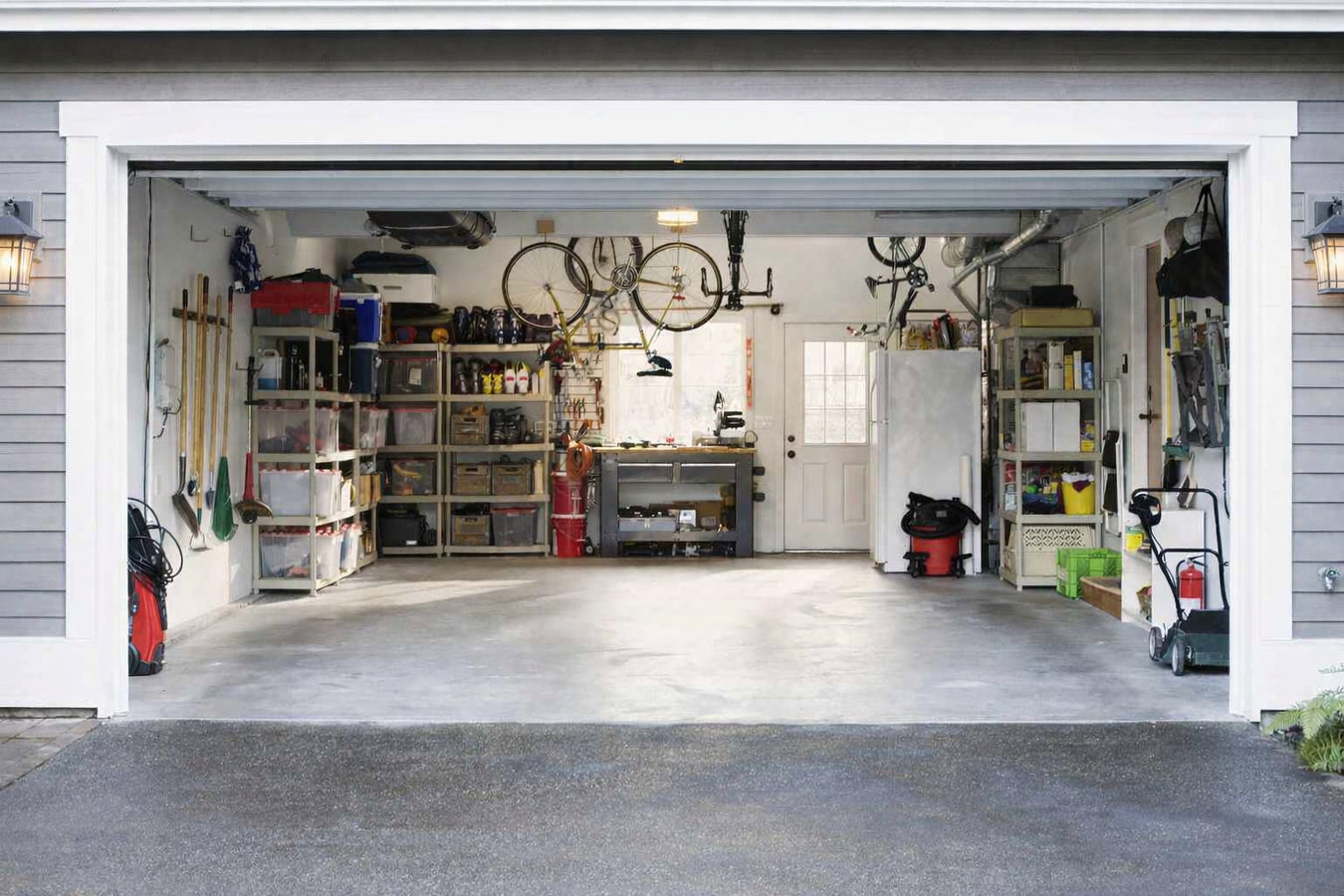
Your garage floor takes a beating every day. If it is cracked, uneven, or flaking, a properly poured replacement built for Prescott winters will solve it for decades.
Garage floor concrete in Prescott involves removing your old slab or preparing bare ground, compacting the base, and pouring a fresh slab that is finished and cured to handle the area's clay soils and freeze-thaw winters. Most standard two-car garage jobs take one to two days of active work, with a seven-day wait before you can park on it.
Prescott's elevation - roughly 5,400 feet - creates curing challenges that contractors in Phoenix or Tucson never deal with. Low humidity and intense sun pull moisture out of fresh concrete fast, which can leave hairline cracks in a slab that looked fine the day it was poured. If you are also thinking about upgrading the look of your floor, decorative concrete finishes can be applied as part of the same project.
Getting the base right before the pour is the part of this job that determines whether your floor stays flat for 30 years or starts cracking in three. That step is invisible once the concrete sets - which is exactly why it matters so much.
Small hairline cracks are normal and usually cosmetic. But if you can fit a pencil tip into a crack, or if cracks are spreading in a web pattern, the slab has likely shifted or settled. In Prescott, this is often tied to the clay-heavy soils that expand and contract with seasonal moisture changes, and it tends to get worse rather than stabilizing.
If the top layer of your garage floor is peeling away in chips or leaving rough, pitted patches, that is called spalling. In Prescott, this is a common result of freeze-thaw cycles working on a slab that was poured thin, mixed poorly, or never sealed. Once spalling starts, it spreads - and a floor in that condition is harder to coat or repair than to replace.
A garage floor should drain toward the door or a floor drain, not pool in the middle or along the walls. Low spots that collect water are a sign the floor has settled unevenly. Standing water also accelerates rust on tools and vehicles and can seep under wall framing over time.
If you knock on your garage floor with a hammer handle and hear a hollow sound in certain spots, the concrete has likely separated from the base underneath. A hollow floor is at risk of cracking or collapsing under vehicle weight, and the delamination will spread the longer it is left alone.
A full replacement starts with removing the existing slab, hauling away the debris, and properly preparing the ground underneath. That means grading, compacting, and adding a gravel layer to create a stable, well-draining base. We embed steel reinforcement before the pour, then finish the surface to your chosen texture. If you need concrete floor installation in other areas of your home - a workshop, utility room, or converted space - we handle those the same way.
For homeowners who want more than a plain slab, we also offer decorative finishes applied to the cured concrete. Coatings, stains, and polished finishes transform a standard gray floor into something that is easier to clean, visually sharp, and more resistant to staining. We pull the required permits from the City of Prescott Building Safety Division and coordinate the inspection on your behalf.
Best for floors with significant cracking, settlement, or spalling that is past the point of patching.
For garages being built from scratch - we form, pour, and finish to the thickness and reinforcement your use requires.
For homeowners who want a finished look and easier cleanup - applied over a properly cured slab.
Prescott sits at about 5,400 feet. That elevation brings low humidity, intense sun, and real winters with overnight freezes from November through March. Those three things together are harder on a garage floor than anything you find in Phoenix or Tucson. The dry air pulls moisture out of fresh concrete faster than it should cure, and the freeze-thaw cycle works on any crack or pore in the surface - expanding it with each cycle. A slab that was never properly sealed is especially vulnerable.
The soil also matters here. Much of the Prescott area sits on clay-heavy ground that swells when wet and shrinks when dry. That movement pushes up against and pulls away from a slab season after season. Homeowners in Prescott Valley and Chino Valley deal with the same expansive soil conditions. Proper base preparation - not just pouring concrete on whatever is there - is the only way to prevent that movement from cracking your floor within a few years.
We will ask about your garage size, whether there is an existing slab, and what you plan to use the space for. We respond within 1 business day and schedule a site visit - no price quote comes before we see the ground conditions yourself.
We measure the floor area, check the existing slab or soil, and look at drainage and access. You receive a written estimate covering demo, base prep, the pour, and any finish options. If a permit is required, it is included in the estimate - we handle the application.
Once you accept the estimate, we submit the permit to the City of Prescott Building Safety Division. Straightforward residential permits typically take one to two weeks. Your pour date is scheduled after the permit clears.
We remove the old slab, compact and grade the base, and pour the new slab. We protect the surface during curing given Prescott's dry conditions. Plan for foot traffic after 24 hours and vehicles after seven full days.
We respond within 1 business day. There is no obligation - if the estimate does not work for you, you owe us nothing. After you submit, someone from our office will call to schedule a free on-site visit so we can measure the space and give you a real number.
(928) 582-8713At 5,400 feet with low humidity and intense sun, fresh concrete dries faster than at lower elevations. We use curing compounds and wet curing methods specifically for these conditions - not just finishing and walking away. That extra step is what separates a floor that lasts from one that cracks within two winters.
Prescott's clay-heavy soils move with moisture. A slab poured over a poorly prepared base will follow that movement. We compact and grade the subbase and add a gravel layer on every job. The work is invisible once the concrete sets, but it is what determines whether your floor stays flat for 30 years.
The City of Prescott requires a permit for most full slab replacements. We pull the permit, coordinate the inspection, and keep you informed. That inspection is actually in your favor - it is a second set of eyes on the base prep before it is covered forever. Skipping it creates problems if you ever sell your home.
No contractor can give you a reliable price over the phone - soil conditions, site access, and existing slab condition all affect the number. We come out, measure, and give you a written estimate that spells out every line item. You decide from there. The visit costs you nothing.
Garage floor concrete in Prescott is not a job where shortcuts stay hidden - the results show up within a season or two. We do the base work right the first time so you are not calling someone back for repairs. The Portland Cement Association publishes the guidelines contractors should follow for base preparation and curing in hot, dry, and cold conditions - we follow them on every pour.
Upgrade your garage floor or other surfaces with stamped, stained, or polished finishes that add lasting visual appeal.
Learn MoreFor interior slabs beyond the garage - workshop floors, utility rooms, and converted spaces built to hold heavy loads.
Learn MoreSpots fill up fast in Prescott's spring and fall pour windows - contact us now to get on the schedule before the best weather passes.