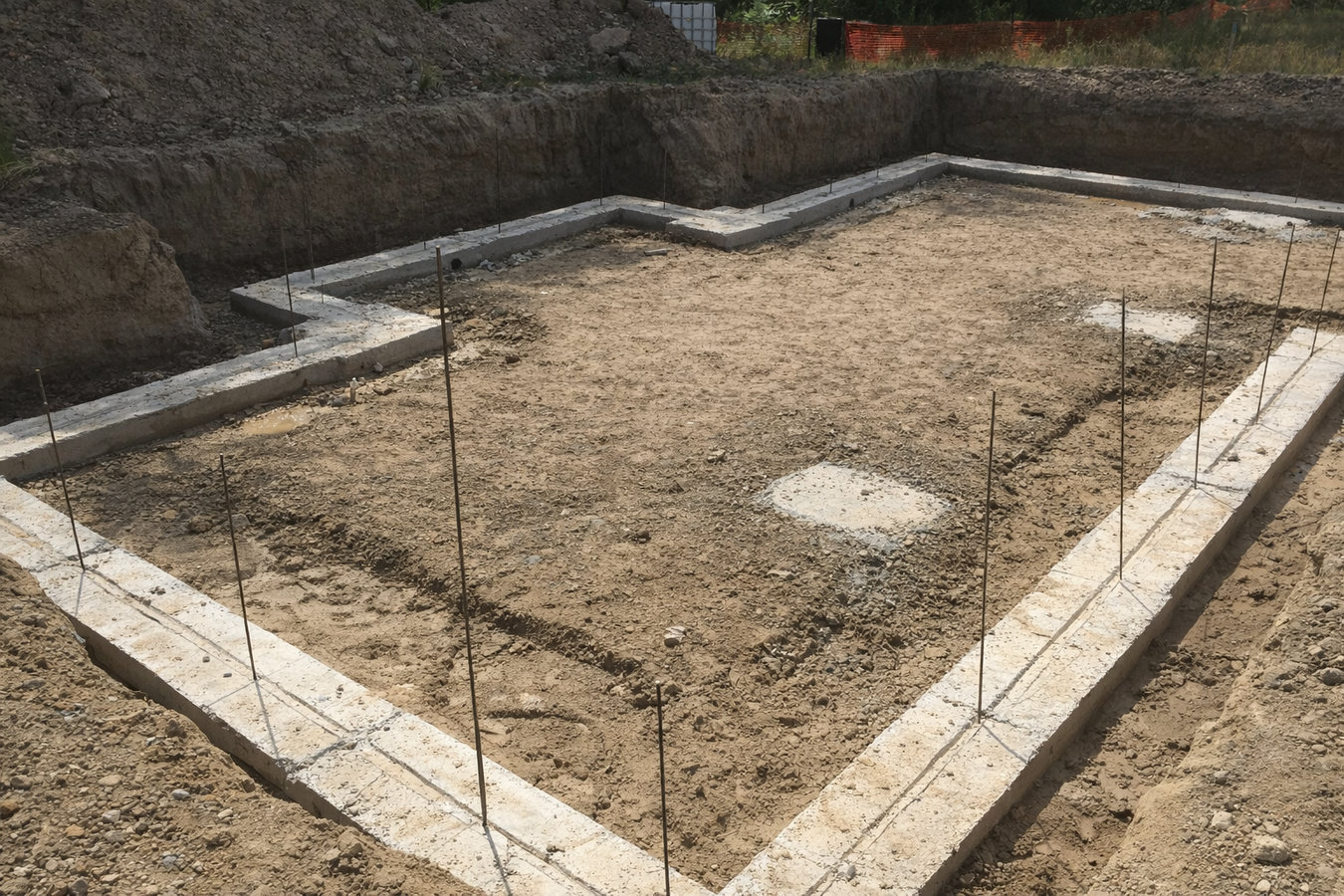
A deck that tilts, a wall that leans, a structure that shifts every winter - these are footing problems. We dig to the right depth, handle caliche and bedrock, and pull the city permit before a single shovel breaks ground.
Concrete footings in Prescott are the buried bases that hold up decks, additions, retaining walls, and garages - dug to the depth your elevation demands, reinforced with rebar, inspected by the city before the pour, and cured properly in a climate that dries concrete out fast if you let it. Most residential footing projects take one to two weeks from permit approval to a surface ready to build on.
If you are planning a new deck, room addition, or detached structure, the footing is the one part you cannot go back and fix once it is in the ground. Prescott's soil presents real challenges - caliche layers and granite bedrock close to the surface can slow excavation significantly, and the freeze-thaw cycle at 5,400 feet will push a shallow footing out of position over time. Getting the depth and mix right from the start is not optional here.
If the structure you are building will also need a full concrete slab, our foundation installation service covers how we combine footing and slab work into a single permitted project scope.
If you can see a gap opening between your deck and the exterior wall, or if the deck surface has started to tilt, the footings underneath may have shifted. In Prescott, this often happens when footings were poured too shallow and the freeze-thaw cycle has pushed them out of position over time. A shifting deck is a safety hazard, not just a cosmetic issue.
Diagonal cracks running from the corners of windows or doors, or horizontal cracks near the base of a concrete block wall, often point to footing movement below. Prescott's rocky, expansive soils can shift with seasonal moisture changes, and footings that were not designed for those conditions will eventually show it in the structure above.
A retaining wall bowing outward or leaning toward the downhill side means the footing holding it in place is no longer doing its job. This is especially common in Prescott's hillside neighborhoods, where walls hold back significant soil weight. A leaning wall can fail suddenly, and the damage to landscaping and structures below can be significant.
When the ground under a home shifts, the frame shifts with it, and doors and windows are often the first place you notice. If multiple doors or windows in the same area of your home have started sticking or showing gaps at the corners, it may be worth having a contractor look at the foundation and footings in that section of the house.
Every footing project starts with a property visit before any numbers are finalized. We look at the soil, the slope, access for equipment, and any obstacles like tree roots or utility lines. In Prescott, we specifically note whether the area has caliche or granite close to the surface, since that directly affects how long excavation takes and what equipment is needed. You receive a written estimate that breaks down labor, materials, and what happens if difficult soil conditions are encountered - no mid-project surprises.
We handle the City of Prescott permit application and schedule the required pre-pour inspection. Once the inspector approves the excavation and rebar placement, we pour the same day or the next - usually a matter of hours for a standard residential footing. In Prescott's dry climate we protect fresh concrete during the curing period so it reaches full strength, not just surface hardness. Homeowners planning a larger project that combines footings with a full concrete slab should also look at our foundation installation service, while those raising or repairing an existing foundation can find details under our foundation raising service.
Best for homeowners adding or replacing a wood or composite deck that needs properly sized, permitted footings before framing begins.
Best for room additions, sunrooms, or garages where new footings must tie into the existing foundation at the correct depth.
Best for new or rebuilt retaining walls in Prescott's hillside neighborhoods where soil pressure and drainage must both be addressed.
Best for pergolas, carports, and freestanding structures that need individual poured footings rather than a continuous perimeter.
The Bradshaw Mountain foothills that Prescott sits in mean two things for footing work: caliche and granite are common just below the surface, and the freeze-thaw cycle at 5,400 feet is real. Caliche - a hard calcium-rich layer - can require jackhammering or specialized equipment when a crew hits it, adding time and cost. This is why your written estimate should always spell out what happens to the price if difficult soil is encountered. The American Concrete Institute provides footing design standards that account for these soil load and frost-depth variables, and we apply those standards on every Prescott job. Homeowners in Dewey-Humboldt and Prescott Valley face similar soil and frost conditions, and we bring the same local approach to every job in those communities.
Prescott's wildland-urban interface also matters for some properties. Neighborhoods that border Prescott National Forest may have additional site requirements that affect project timelines and material choices. If your property is in one of those zones, we flag it early and coordinate with the City of Prescott permit office so you are not caught off guard mid-project. The International Code Council building standards set the frost-depth and structural requirements that the City of Prescott building code adopts - every footing we pour meets those minimums and, where local conditions demand it, exceeds them.
We ask a few basic questions about what you are building and where, then schedule a free on-site visit. We look at the soil, slope, access, and note any signs of caliche or bedrock before finalizing any numbers. You receive a written estimate with a clear line about what happens if difficult soil is encountered.
We apply for the required permit through the City of Prescott Development Services on your behalf. Permit review typically takes several days to two weeks. We keep you updated and work does not begin until the permit is in hand - never before. We reply to all inquiries within one business day.
On work day one, the crew digs to the required depth, sets forms, and places steel rebar inside. We call 811 before digging to have underground utilities marked - a standard step every reputable contractor handles automatically. Expect noise and excavated soil nearby for one to two days.
A city inspector must review and approve the excavation and rebar before any concrete is poured - this is required, not optional. Once the inspection passes, concrete is poured the same day or the next. We protect the fresh concrete during curing and give you a clear timeline for when the next construction phase can begin.
Free on-site estimate with a written quote. We handle the permit, inspection, and caliche surprises so your project stays on schedule.
(928) 582-8713We flag the likelihood of caliche and granite during the site visit, not after the crew hits it. Your written estimate includes a clear explanation of what happens to price and timeline if difficult soil is encountered - so you are not in the middle of a project conversation you were not prepared for.
A footing poured to Phoenix depth standards will shift in a Prescott winter. We verify the current local frost-depth requirement with the City of Prescott before finalizing any footing design - and we pour to that depth, not to whatever is cheapest to excavate.
The city inspector must approve the excavation and rebar before concrete is poured - once it is in the ground, there is no way to verify what is underneath. We schedule the inspection as a standard part of every project, not an afterthought, so your footing is on record and fully compliant.
At Prescott's elevation, concrete can look and feel hard long before it has actually cured. We protect fresh footings during the cure period with blankets or misting as needed - especially important in summer when low humidity and intense sun pull moisture out of the slab before it has reached full strength.
Any contractor doing footing work in Arizona must be licensed through the Arizona Registrar of Contractors and you can verify any license in minutes. We meet that requirement and welcome you to check before you sign anything - because the footing is the one part of your project you will never be able to go back and fix.
When an existing foundation has shifted or settled, we assess whether raising and releveling is the right fix before recommending full replacement.
Learn MoreFor projects that need both footings and a full concrete slab, our foundation installation service covers the complete scope under one permitted project.
Learn MorePermit review times at the City of Prescott lengthen in the spring building season - contact us now to lock in your start date before the backlog grows.